A thought for today: Take a moment to notice what stories you tell yourself about your life. Not to judge or optimize the past, but simply to observe which narratives you keep alive. For our memories are not pure facts, but stories that we ourselves shape – and that shape us.
Every family, every community has such stories, nurtured as a shared heritage. For us, it is the one about grandfather and the apple tree. Depending on who tells it, the tree is a giant or a delicate sapling. But the essence remains: On a sunny autumn day, he harvested the perfect apple, bit into it, and said: “This one was waiting for me.”
What I remember is not the fact that a man picked an apple. I remember the warmth on my mother’s face when she tells the story. My uncle’s laughter. The scent of apple pie that arises with this memory. The event itself has almost faded behind what we as a collective have made of it: one of our family stories, holding different truths for each of us.
Not an Archive, but an Atelier
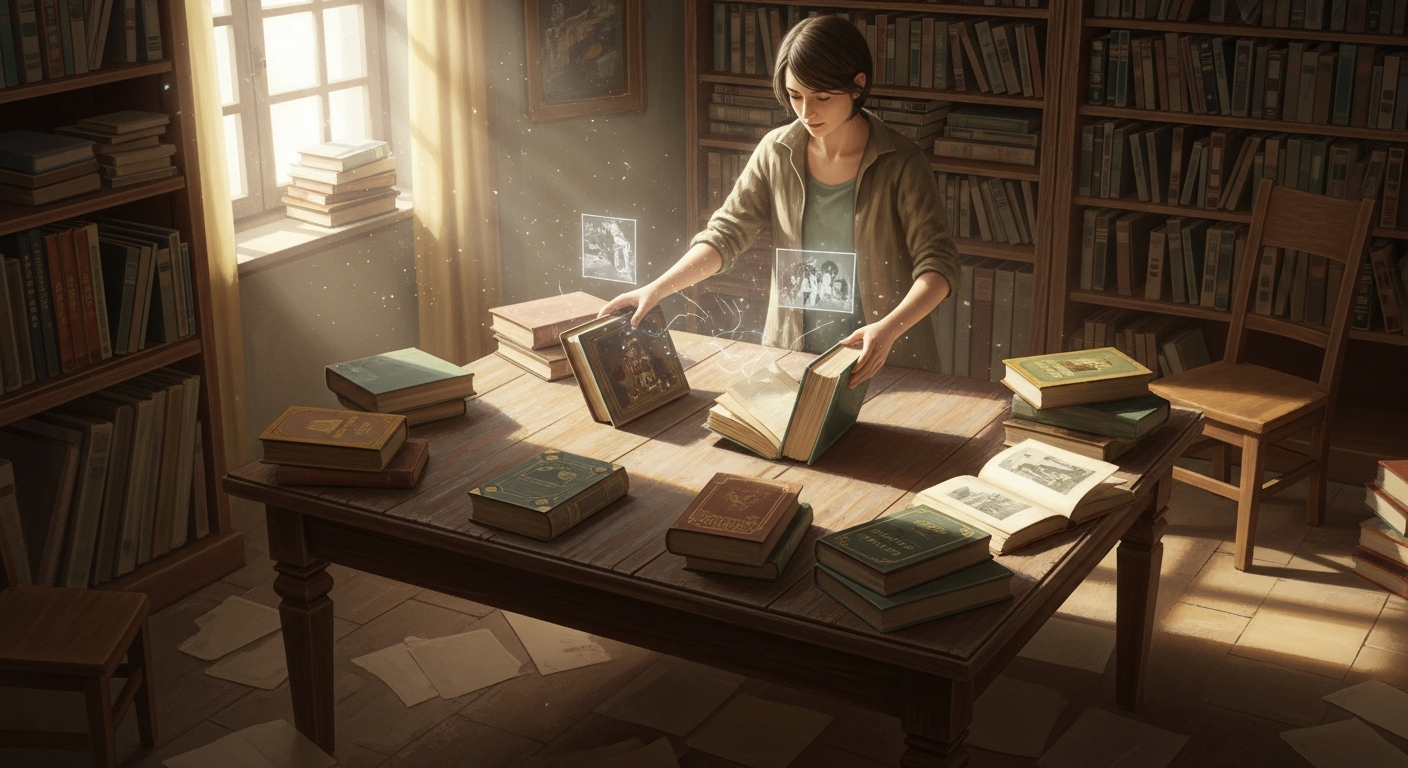
We tend to regard our memory as an archive, a storage for facts. Yet neuroscience reveals a different picture: Remembering is a profoundly creative, reconstructive process. Each time we retrieve a memory, it is reassembled in the brain from fragments. In doing so, the original neural traces are not merely read out, but also slightly altered and re-saved. We recreate the experience anew.
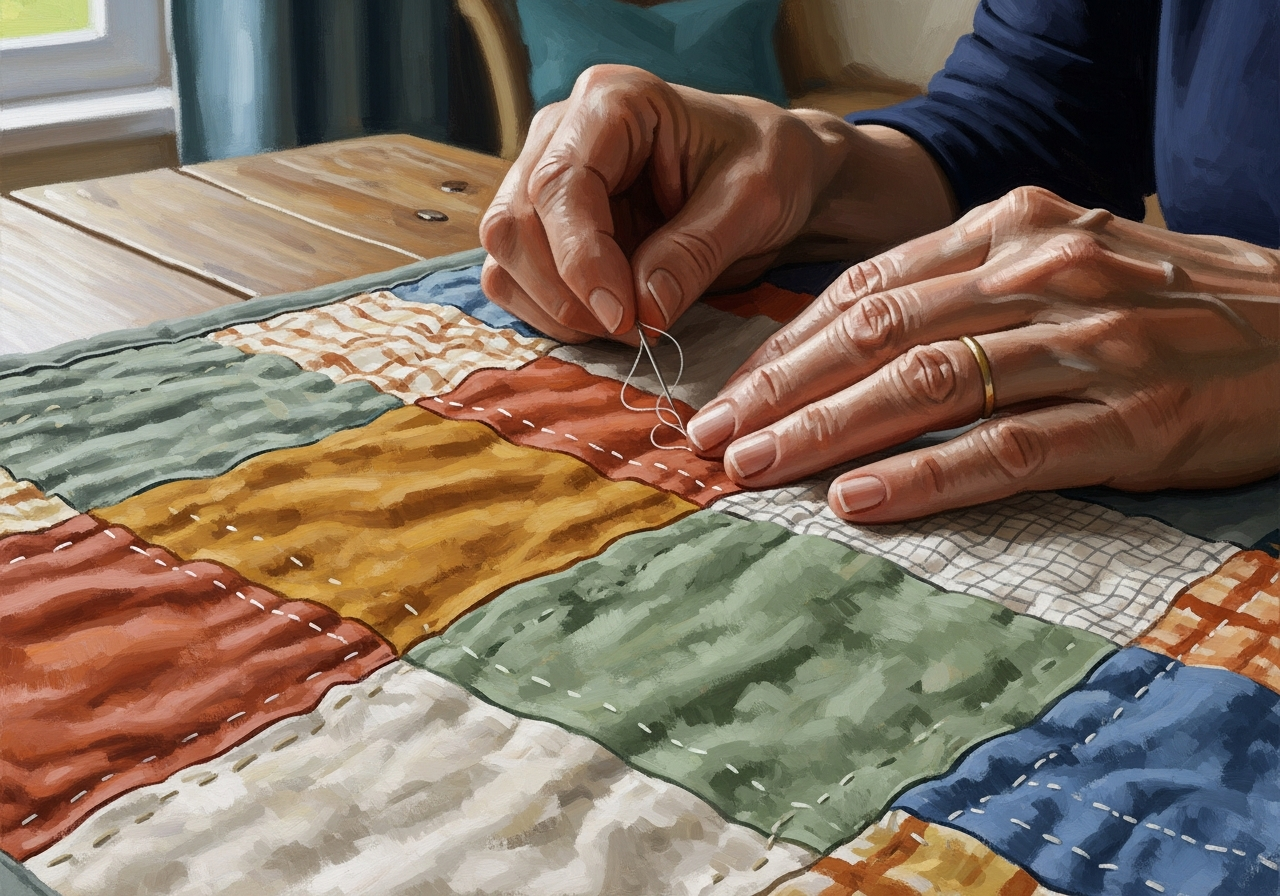
This narrative power is not a flaw in the system. It is a fundamental property of our brain. Cognitive psychologists have often shown this: Subjects who weave a list of random words into a small story can remember them far better than those who merely memorize them. A story connects an event with emotions and meaning, which strengthens neural connections. A list of facts – “2:30 PM, apple picked, 22 degrees” – is sterile. A narrative, however, allows us to feel what happened and gives the fact meaning.
Who We Are Is a Story
This unconscious, narrative work is the process through which we create ourselves. We bend our memories so much that they shape our self-image. Was the job loss a catastrophe or the necessary impetus for a new beginning? Was a failed relationship a failure or a lesson about intimacy? The facts are the same, but the story we tell ourselves about them determines how we integrate the experience into our lives.
We do this anyway, every day. The real question is not whether we interpret our past, but how. The conscious decision to give a memory a new, perhaps more healing or growth-promoting narrative, is not a distortion of the truth. It is the act of taking authorship for one's own life. We are the curators of our memory. We decide what becomes a key chapter and what remains a footnote. Our identity is less a collection of facts than a library of stories that we visit again and again, rearrange, and sometimes rewrite.
The story about my grandfather’s apple tree tells me less about him today than about our family’s longing for shared roots and moments of simple beauty. It is a good story. And the stories we keep, that we nurture and pass on, are rarely the most exact. They are the ones that signify who we are.