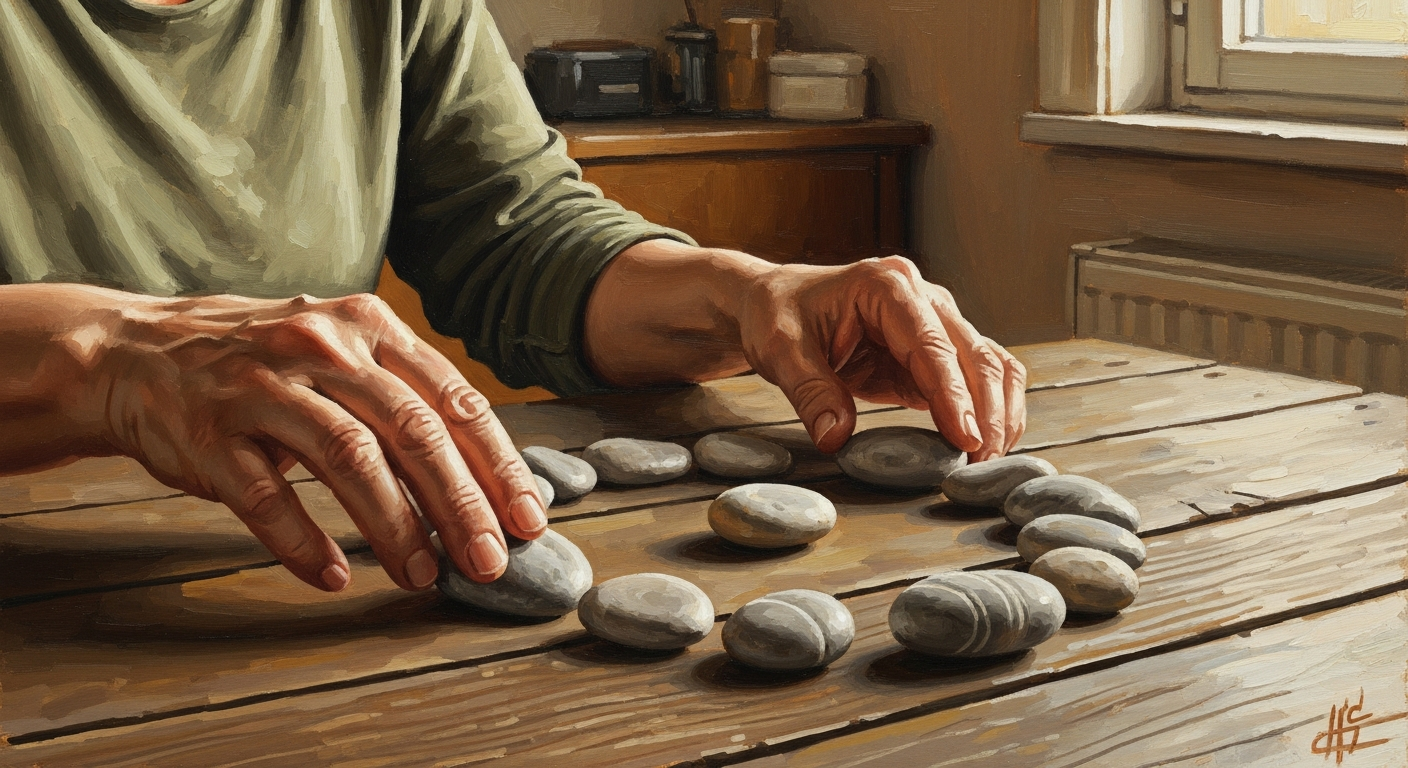
The scent of freshly ground coffee. The gentle hiss of water as it pours into the pot. The familiar warmth of the cup in your hands. It is a sequence, repeated a thousandfold, a silent pact with the dawning day. Merely a habit to wake up? Perhaps. But perhaps it is also more. Perhaps it is the quiet echo of something far older, rooted deep within our human history.
When you consciously shape this moment – not just pouring the water, but perceiving it as a beginning; not just grasping the cup, but feeling its warmth as an anchor – you create an island of intention in the flood of everyday life. And precisely therein lies the difference. It is more than routine. It is a small, private ritual whose power we often overlook.
The Subtle Difference Between Doing and Celebrating
We tend to use the terms habit and ritual synonymously, yet they describe two fundamentally different human impulses. Distinguishing them is a key to understanding why one simplifies our lives and the other deepens them.
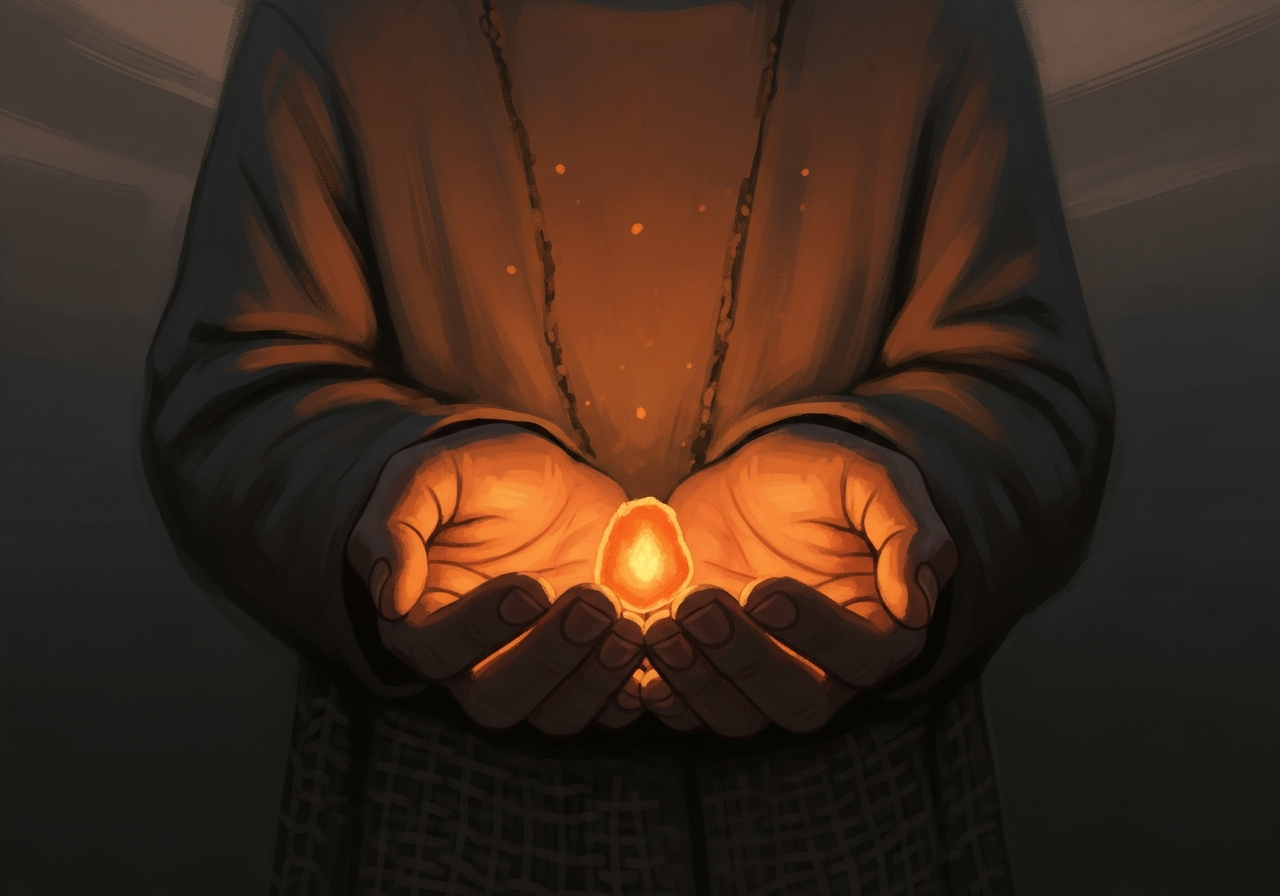
A habit serves efficiency. It is a neurological shortcut that unburdens the brain, so we don't have to rethink every single movement. It often unfolds unconsciously and aims to achieve a result with the least possible mental effort. Brushing your teeth is a habit.
A ritual serves meaning. It is a conscious act that imbues an action with intention, attention, and often symbolic value. It is not just about the what, but about the how and the why. A shared dinner can be a habit – or a ritual of connection.
This need for meaning is not a modern phenomenon. It is an evolutionary legacy. Its traces lead us back to the beginnings of human community, to a time when survival depended on clear structures and a shared understanding of the world.
In the Beginning, There Was Fire
Imagine a small group of early humans, gathered around a fire in the darkness. The fire is more than just warmth and protection from predators. It is a center. The way wood is gathered, embers are kindled, and the community is arranged around it follows a pattern. This repeated, intentional action, which creates security in the face of chaos, is the birth of ritual.
Anthropologists assume that historically, rituals primarily fulfilled three core functions that continue to resonate today: They created order and security in an unpredictable world by marking the change of seasons or birth and death. They forged social cohesion, because shared actions built trust and a collective identity. And they gave major life transitions a visible and emotionally palpable structure.
The historian of religions Mircea Eliade described this process as the creation of “sacred time” amidst profane, everyday time. A ritual lifts a moment out of the flow of the ordinary and imbues it with special weight.
In our modern world, so intensely focused on efficiency and measurable progress, we have lost many of these communal rituals or seen their meaning flatten into mere habit. The funeral becomes a logistical task, Sunday dinner a quick refuel before the new work week. We have retained the actions, but often forgotten the intention behind them.
Yet the need has remained. It manifests in the way we prepare our desk for a focused workday. In the careful preparation of tea when we seek calm. Or in the silent handshake that seals a friendship without words. These small actions are punctuation marks in the prose of everyday life. They give space and dignity to a thought, a feeling, or a transition.
Rediscovering the Spark
How can we turn up the volume on this echo of the fire in our own lives? It's not about inventing new, complicated ceremonies. It is rather an invitation to observation, a gentle reorientation of our gaze towards what is already present.
Instead of a guide, it is perhaps a question you can pose to one of your daily actions: What if this action is not merely performed, but shaped? What if, for a moment, you give your morning coffee your full attention and connect it with the intention of starting the day clear and awake? What if locking the door in the evening is not just a mechanical turn, but a conscious act that stands for security and solace?
You don't have to add anything or optimize. It is a transformation from within. An everyday habit becomes a personal ritual that connects you to something greater: the timeless human endeavor not merely to exist, but to truly be present.
Observe your own small routines. Perhaps you will discover that you are already surrounded by rituals simply waiting to be recognized as such. In them, you will find a quiet, warming echo of that first fire our ancestors once kindled in the darkness. And perhaps you will hear it too – the soft crackle of a fire that has never quite gone out.
You Might Also Be Interested In
The World in a Hand Movement
Our article spoke of how conscious actions become rituals. But what stories are already hidden within our everyday gestures? Learn more here about the hidden language of our hands.
What If Happiness Isn't a Destination At All?
You've read how the conscious shaping of small moments creates more meaning than mere efficiency. This thought leads further: What if true well-being lies not in optimization, but in embracing the journey?
Memory, a Storyteller
Rituals connect us to our collective past. Now discover how your personal memory also stores moments not as facts, but as formative stories that shape your identity.