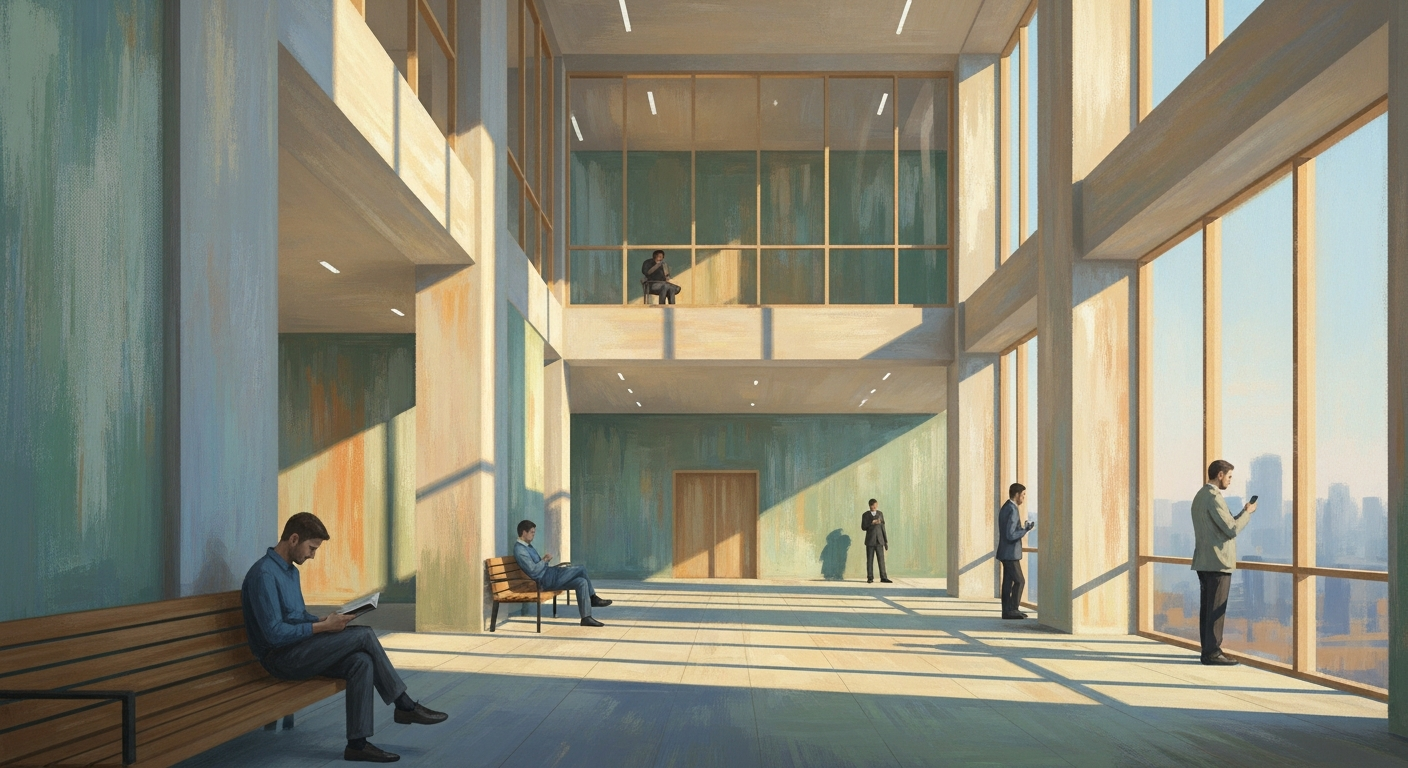
We have created spaces whose sole purpose is respect for the concentration of others. A remarkable idea in a world otherwise designed for interaction and exchange. They are extraordinary islands of calm amidst the din of everyday life; places that are full of the traces of other people, yet leave so much room for one's own thoughts. Here, everyone is in one place, but no one is in the same place. And in this shared secret lies their special quality.
We tend to view these spaces as mere places of escape, as niches into which we retreat from the deluge of everyday stimuli. But they are more. They are anchor points that enable a very unique form of contemplation: that of being alone amidst others.
The Shared Silence
The silence in a reading room, a church, or the quiet section of a museum is a common good, an unspoken agreement. It does not sound hollow or demanding, but is filled with the silent presence of others.
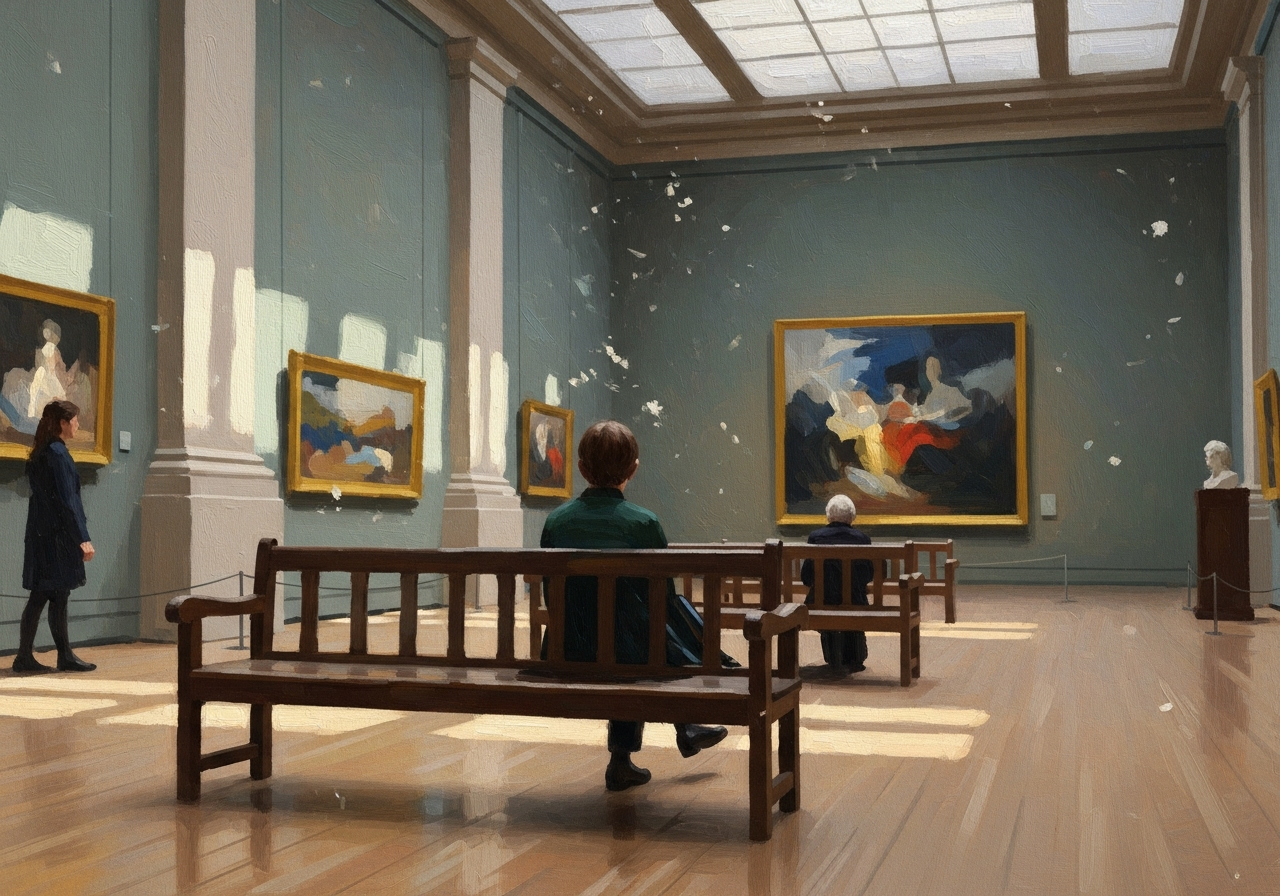
Everyone sitting here pursues their own goal – reading, learning, reflecting, contemplating – but all participate in a shared ritual: respect for the concentration of others. This invisible social architecture creates an extraordinary, protected space. No one expects an answer from us, no one interrupts our thoughts. The presence of others grounds us, without obliging. It is a silent confirmation that the need for retreat is a profoundly human one, one that we share.
Spaces with Memory
Public places of quiet are often also places with a deep cultural memory. A library is more than a room with books; it is a repository for the thoughts of many generations. A museum is a house for memory. When we enter these places, we recalibrate our inner compass. The sight of a centuries-old object or the wandering through rows of shelves full of knowledge places one's own present into a larger perspective. Their purpose is not efficiency, but permanence – and this constancy transfers to us.
The Neurology of Wandering
What happens in these places is more than just a mental break – it is a valuable form of neurological work. The gentle, undirected attention we find here allows thought to unfold, rather than merely function. Neuroscience studies show that in such moments, our brain activates a state known as the „Default Mode Network“.
This network becomes active when we are not focused on a specific task, but instead let our thoughts wander. It connects memories, processes social information, and creates space for creative cross-connections. Public places of quiet are ideal catalysts for this state: they offer enough external stimuli to gently engage the mind, but not so many that they overwhelm it. They are training grounds for our inner capacity for association.
Do visit one of your personal places of quiet again. Regard it with new eyes, as a space that allows your brain to work in its very own, productive way. Perhaps you know someone for whom precisely this curious phenomenon of shared solitude – this cocoon of calm among people – would do good right now. Sometimes, the silent sharing of a place can open up entire worlds.