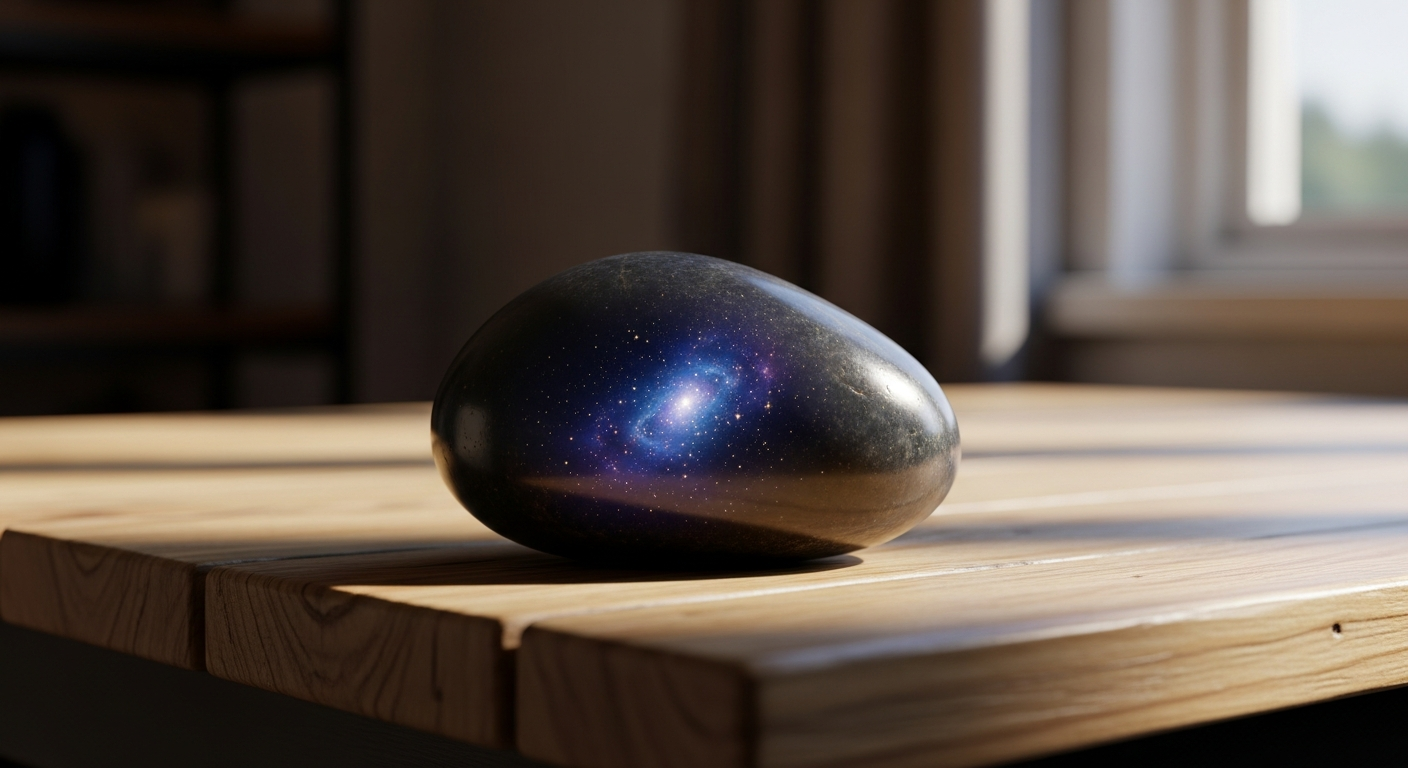
There are these rare, clear evenings. You step outside, the coolness of the night air on your skin, and lift your gaze. Above the rooftops and the muted city lights, a deep, velvety darkness stretches, punctuated by countless points of light. Most of us no longer know the names of the constellations. We can barely distinguish a planet from a distant sun. And yet we pause, almost involuntarily.
This moment holds a quiet power. It demands nothing from you, asks not to be optimized or analyzed. It simply is, a silent invitation. In this moment, you might feel tiny beneath the vast dome of the cosmos – and yet, in an inexplicable way, deeply connected. What happens to us when we gaze upon the cosmos? And why does this kind of reflection feel so different from our usual introspection?
The Echo of Eternity: A Journey Through Light-Years and the Past
The first thing that shifts is your sense of time. The moonlight falling on your face is little more than a second old. The light from our nearest star, Proxima Centauri, traveled for over four years to reach you. And when you make out the Andromeda Galaxy as a tiny, hazy smudge in the sky, you are looking 2.5 million years into the past.
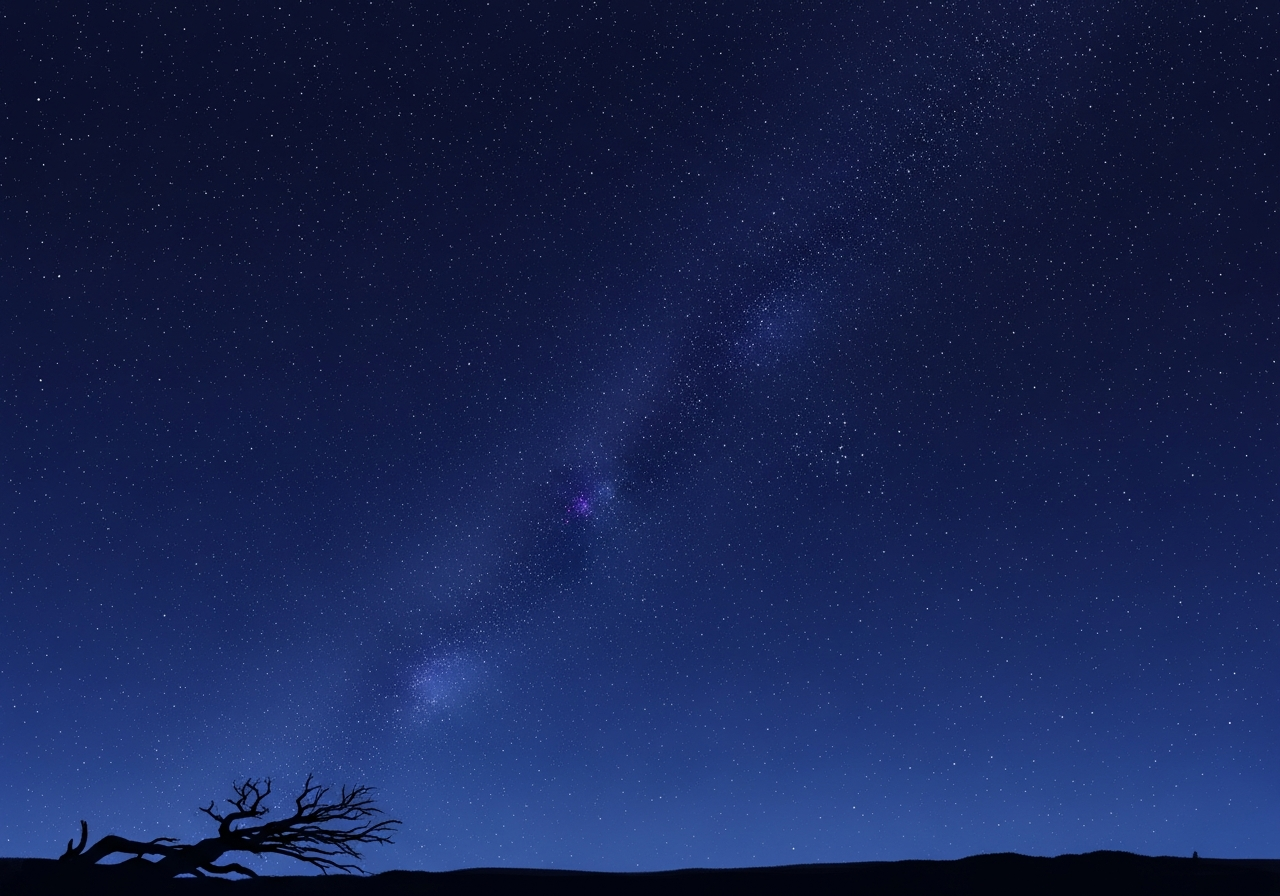
Observing stars is a form of time travel. You see celestial bodies not as they are now, but as they were when their light began its long journey to you. The night sky is not a static image, but a living archive, filled with the echo of eternity. This realization does something to our perception of the present. Our worries, plans, and fears, which often feel so urgent and absolute, are for a moment embedded in an unimaginably long timeline. They do not lose their meaning, but their weight becomes lighter, their contours softer.
Cosmic Kinship: From Stardust to the Human Body
The unfathomable distance in space creates perspective, yet matter creates an even deeper connection. It is one of science's most poetic truths: almost every atom in your body heavier than hydrogen was forged in the heart of a star. The stars that lived billions of years ago and exploded in massive supernovae were cosmic furnaces. Within them, lighter elements fused into heavier ones: carbon, oxygen, iron.
This stardust scattered throughout space, forming new suns, new planets, and eventually, life on Earth. The calcium in your bones, the iron in your blood – all have a stellar origin. You are, in the most literal sense, made of stardust. This fact is more than a fascinating detail. It is a reminder of a profound kinship. We are not separate observers of the universe; we are an expression of it. The cosmos is not just „out there“; it is also within us. The boundary between observer and observed dissolves.
The Psychology of Awe: A Gaze That Expands Us
Herein lies perhaps the greatest difference from other forms of self-contemplation. When we meditate or journal, we direct our focus inward. We try to untangle our feelings and understand our own story. This is valuable and necessary.
The gaze toward the stars reverses this movement. It gently draws us outward, lifting us out of the details of our personal narrative. It confronts us with a scale where our individual problems do not vanish, but are placed in a new relation. Psychologists like Dacher Keltner describe this feeling as „Awe“ – that form of reverence and wonder in the face of something immeasurably greater than ourselves. Such moments have been shown to strengthen feelings of connectedness and quiet the ego's loud inner monologue for a moment.
The cosmic gaze is not a tool for self-optimization. It solves no problems and provides no easy answers. Its effect is more subtle: it creates space. It reminds us that our existence is both infinitesimally small and infinitely improbable and precious. It comforts not by downplaying difficulties, but by expanding the framework in which they occur.
The next time you stand beneath a clear sky, try this small thought experiment. It is a cosmic anchor. Choose a single point of light. Breathe in the cool night air and feel for a moment the unimaginable distance – the light-years of emptiness that separate you from that star. And then, with your next breath, recall the intimate proximity: The very same material that makes up that distant star is, at this moment, pulsating within you. Hold both simultaneously in your awareness: the infinite expanse and the inseparable kinship. In this tension lies a unique kind of peace – the realization of being a tiny, conscious piece of the universe, capable of marvelling at itself for a brief, luminous moment.
Read More
- Dacher Keltner, Awe: The New Science of Everyday Wonder How It Can Transform Your Life, Penguin Press, 2023.
- Carl Sagan, Cosmos, Random House, 1980. (A classic that makes the scientific poetry of the universe accessible.)
- Jocelyn Bell Burnell, A Quaker Astronomer Reflects: Can a Scientist Also Be Religious?, a lecture that connects science and the search for meaning.
You Might Also Be Interested In
The Quiet Conversation of Trees: What We Hear When We Listen Differently
Gazing upwards reveals cosmic connections. Yet, beneath our feet, there is also a hidden universe. Learn here how trees communicate and what we can learn from their silent wisdom.
The Art of Not Knowing
The wonder of the night sky is a feeling often lost in everyday life. This article shows you how to rediscover a beginner's curiosity and thereby bring more fascination into your life.
When Thoughts Go for a Walk
Looking at the stars is a form of reflection that draws us outward. If you are looking for an equally effective method to find inner clarity, this mental stroll might be the right path for you.