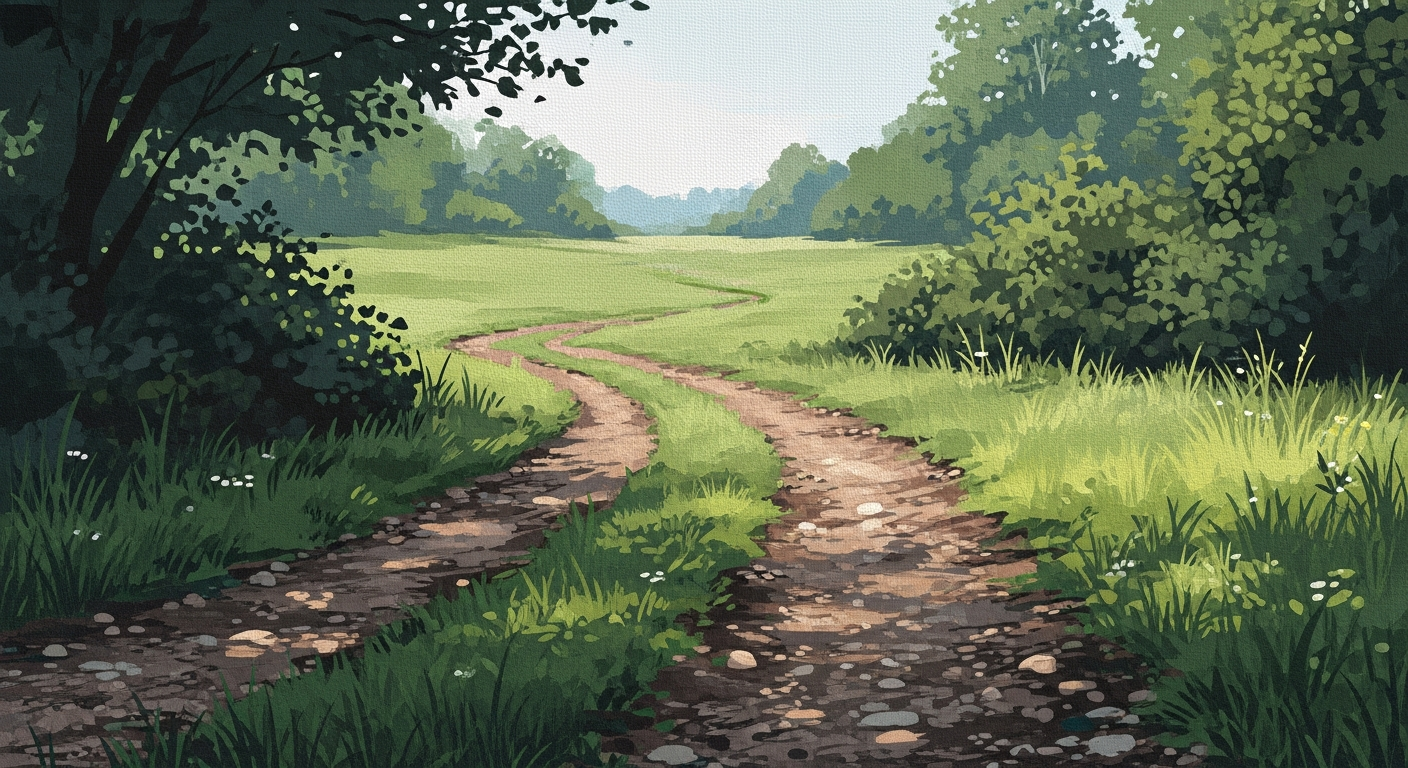
A narrow, earth-toned streak runs diagonally across an otherwise pristine lawn. A shortcut through a bush that connects two official paths. A worn hollow at the edge of a paved square, precisely where people wait for the bus or gather for conversation. They exist almost everywhere, and yet we often only perceive them out of the corner of our eye.
These traces have many names. In German, they are called Elefantenpfade (elephant paths) or Trampelpfade (trodden paths). In English, there is the beautiful term „Desire Paths“ – Wunschpfade. These are the paths not planned by landscape architects, but created by feet; born from the sum of countless small, individual decisions for the most direct or simplest route. Fundamentally, each of these paths is the visible answer to a single, silent question:
Where would people walk, if one simply let them?
Traces of a Silent Agreement
A trodden path is more than a shortcut. It is a quiet act of collective, unconscious creation. No one consults, no one organizes its construction. One person chooses a new path, perhaps out of haste, perhaps out of intuition. Others follow. With each step, the trace becomes a little clearer, the ground firmer, the invitation to those who follow greater. It is a form of small-scale democracy, in which the most frequently used route wins out over time.
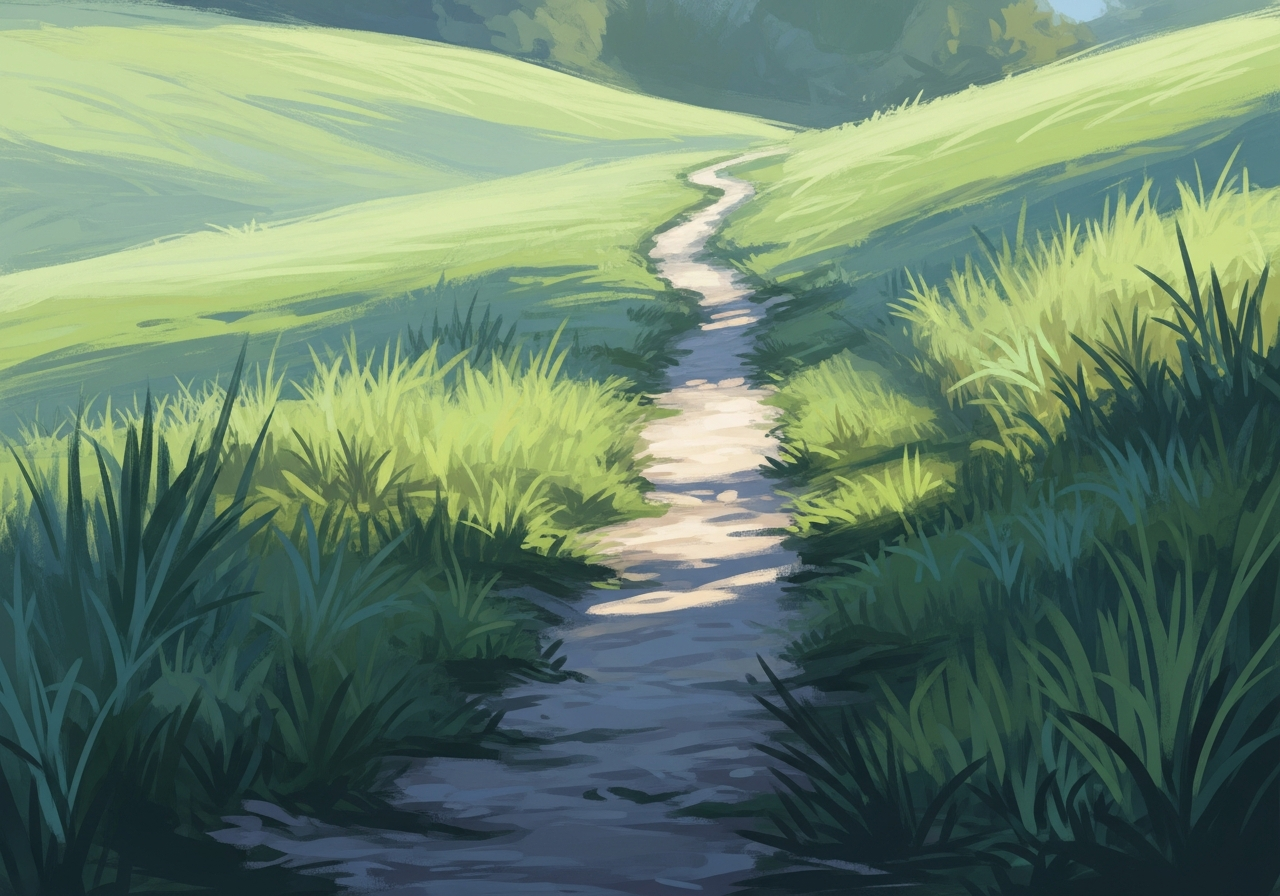
Wise urban planners and architects have learned to read this form of intuitive navigation. Instead of dictating rigid path systems from the outset, they sometimes leave the areas initially open after the completion of a new park or university campus. They observe where the desire paths form over weeks and months. Only then, when people's paths have revealed themselves, are the official paths laid out and paved precisely there. They follow the already existing wisdom of the crowd, instead of ignoring it. The result are places that feel not only beautiful, but also natural and right.
The Paths We Truly Walk
Perhaps the fascinating thing about these paths is that they remind us of something that goes far beyond the design of public spaces. In our lives, too, there are the predetermined, official paths: the straightforward career plan, the expected steps in a relationship, the recognized milestones of a successful life. They are safe, well-lit, and accepted by most people.
And then there are the desire paths. The decision to change one's field of study because another subject exerts an inexplicable pull. The detour via a sabbatical, which is not foreseen on any career ladder. The friendships that are not based on social circles, but on a deep connection. These are the decisions that arise from an inner compass, not from an external map. They often feel like a risk, a deviation from the norm. Yet in retrospect, we often recognize them as the paths that truly led us to ourselves.
These inner paths are rarely as clearly visible as their earthy counterparts in the park. They do not arise from hundreds of steps in a day, but through many small, courageous decisions over years. They require the willingness to trust one's own sense of what feels right, even if the official path seems easier.
It is not about rejecting all planned structures. The paved paths have their purpose; they provide stability and orientation. But the existence of desire paths reminds us that there is always also an alternative that arises from within ourselves. A silent, intuitive intelligence that knows where we want to go.
Perhaps you'll pay attention sometime to where your feet carry you when you are lost in thought. Sometimes the most inconspicuous path shows us the most honest way.